Copenhagen – Castles, Canals and a Warship That Really Should Have Checked Its Aim
Copenhagen is one of those cities where you can wander around for a few hours and somehow stumble across a royal palace, a canal full of colourful buildings, a historic warship… and a house that was accidentally shot at by the Danish Navy.
Yes, you read that correctly.
We recently spent some time in Copenhagen and, while it’s a beautiful city with plenty of the usual tourist attractions, it’s the stories behind some of the places that make it particularly interesting.
👑 A Royal Yacht – but not exactly a little pleasure boat
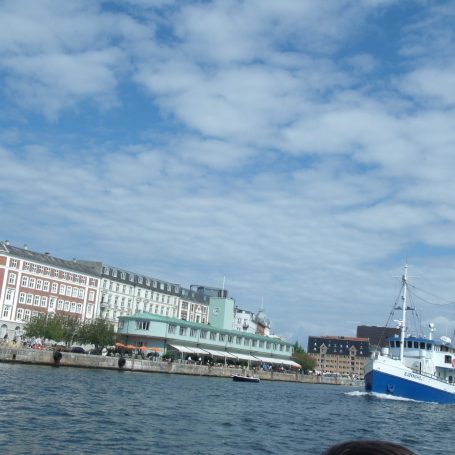
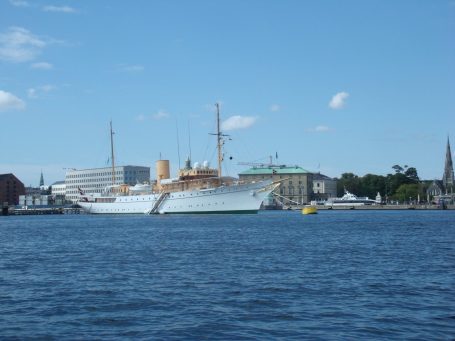
One of the more impressive sights in Copenhagen harbour is Dannebrog, the Danish Royal Yacht.
Built in 1931, the ship is still used by the Danish royal family when they travel around Denmark and visit other countries. It’s essentially a floating royal residence, complete with accommodation, dining rooms and everything you’d expect from a yacht belonging to a monarch.
And it's a proper ship.
At around 78 metres long, it’s considerably more impressive than the sort of boat you might imagine when someone says “royal yacht”.
The yacht is named after the Dannebrog, the Danish flag, which according to Danish legend fell from the sky during a 13th-century battle. Whether you believe the legend or not, the flag is pretty hard to miss — Denmark claims it as the world's oldest continuously used national flag.
Sadly, you can't just wander aboard for a nose around when it's in Copenhagen harbour. Although, if you're lucky enough to see it there, it's worth stopping for a look.
💥 The Danish Navy's slightly unfortunate moment
Now for the story that definitely wasn't in the tourist brochure.
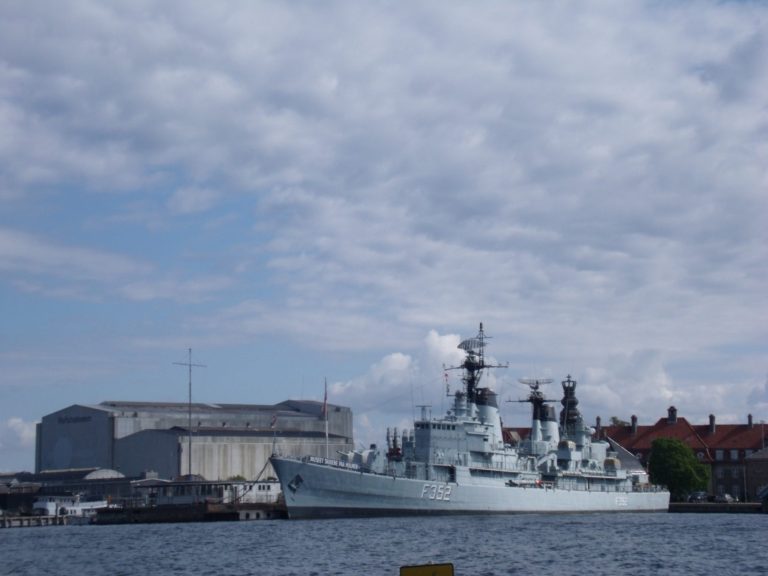
Copenhagen has a long naval history, and one of the ships involved in it was HDMS Peder Skram, a Danish frigate that served from the 1960s until the 1980s.
During a NATO exercise in 1982, something went spectacularly wrong.
The ship accidentally fired one of its Harpoon missiles.
The missile wasn't supposed to go anywhere near Copenhagen. Unfortunately, it didn't get the memo.
It travelled inland and hit a house in the suburban area of Huseby, causing significant damage but, remarkably, no deaths.
The house became known locally as the “Missile House”, and the incident remains one of those wonderfully strange pieces of Copenhagen history that makes you think:
Imagine explaining that to the insurance company.
“Sorry, what caused the damage?”
“Danish Navy.”
“Oh…”
The frigate itself is now preserved as a museum ship at Holmen, giving visitors the chance to see the vessel responsible for one of Denmark's more memorable military mishaps.
🌈 Nyhavn – Copenhagen's colourful postcard
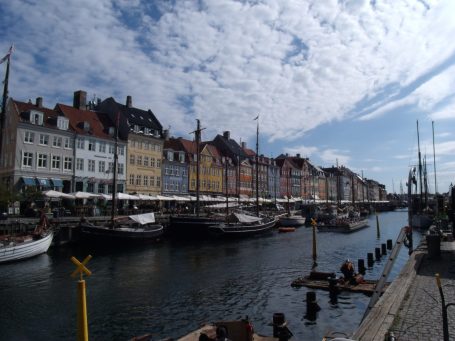
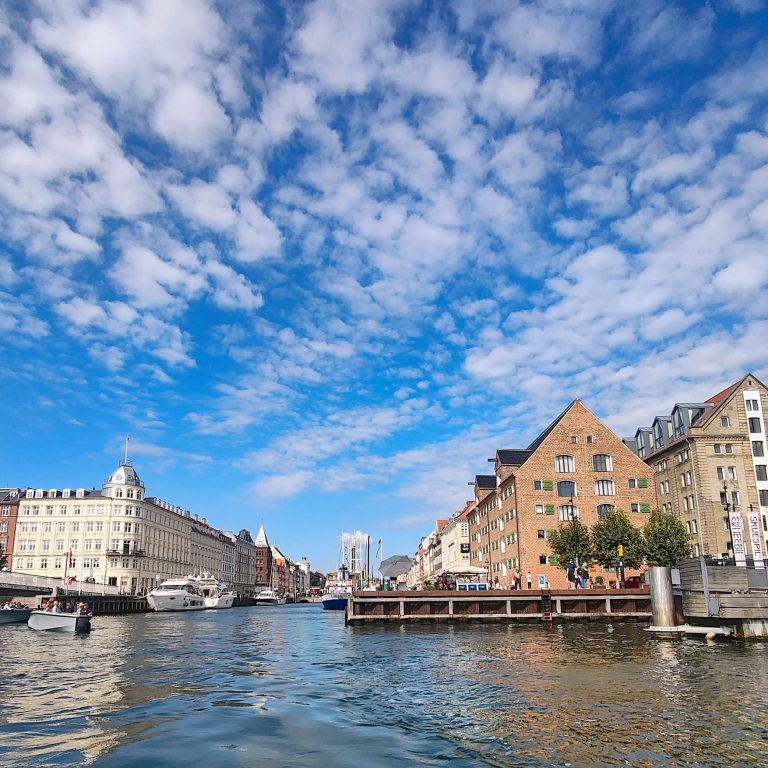
If you've seen a photograph of Copenhagen, there's a very good chance you've seen Nyhavn.
The colourful 17th-century waterfront is probably the city's most recognisable view, with rows of brightly painted buildings packed alongside the canal, historic wooden ships in the water and enough cafés and restaurants to make you seriously question whether you actually need to go anywhere else.
It's incredibly pretty — although there's a reason it's one of the busiest parts of Copenhagen.
Nyhavn was originally a busy commercial port and, historically, it had a rather less glamorous reputation than it does today. Sailors, merchants, drinking establishments and rather questionable nightlife were once the order of the day.
Today, it's considerably more family-friendly.
One of its most famous former residents was Hans Christian Andersen, who lived in several buildings along Nyhavn, including number 67.
So while you're wandering around taking photographs, spare a thought for the fact that one of Denmark's most famous storytellers once called this colourful waterfront home.
🚤 Christianhavn – canals, cobbles and a completely different Copenhagen
Cross the water from the main city and you'll eventually find yourself in Christianshavn.
This is one of my favourite parts of Copenhagen because it feels noticeably different from the grander central areas.
The district was established in the early 17th century and was designed with canals inspired by Dutch cities. Today, those canals are lined with colourful townhouses, boats and cafés.
It's the sort of place where you can just wander without having a particular destination in mind.
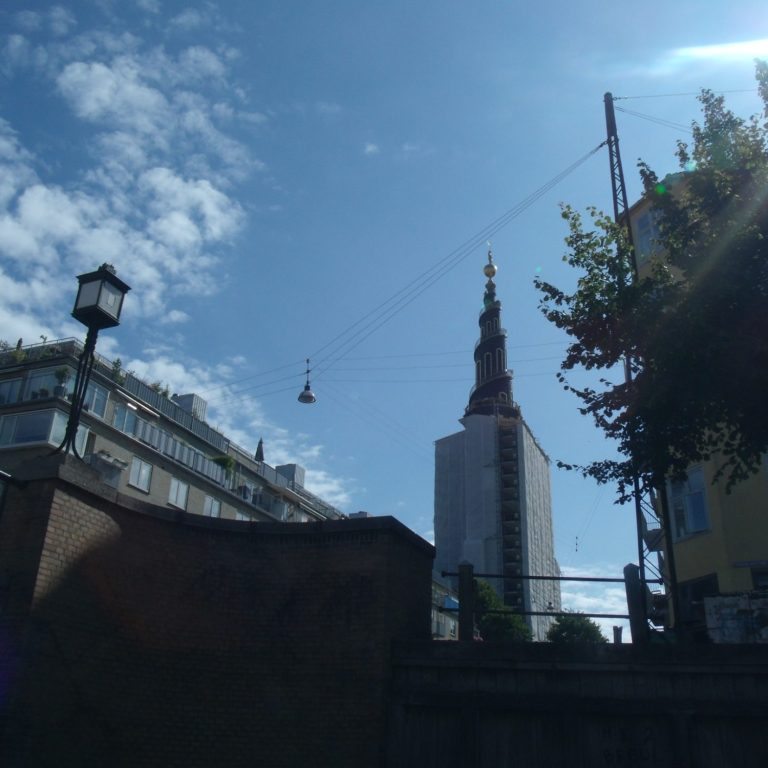
And then there's Church of Our Saviour, with its famous external spiral staircase winding around the tower.
If you're feeling energetic — and aren't bothered by heights — you can climb the 400-odd steps to the top for a pretty spectacular view across Copenhagen.
Or, alternatively, you can admire it from ground level while eating something. We were told by our tour guide on a boat trip (well worth going on one by the way) that we would need to be quick taking a photo as the spire is obstructed by 'Denmark's most photographed tree' from the canal. He was right. Unfortunately it was also covered by scaffolding when we went (this seems to happen to us a lot).
One of the buildings you can spot from the water has a rather surprising past.
Christian IV's Brewhouse was originally built in 1608 as part of Copenhagen's defences. But within a few years, the guns were swapped for something arguably more important to a 17th-century soldier — beer.
The building was converted into a brewery to supply the King's troops and Navy, who apparently had quite an appetite for the stuff.
And when I say quite an appetite, historical accounts put the daily beer allowance at around 10 litres per person.
Before you picture thousands of Danish soldiers knocking back ten litres of Carlsberg a day, though, there's a catch. This was very weak beer, often only around 0.5–2.8% alcohol, and it was also a source of calories and safer to drink than questionable water.
Christianshavn is also home to Freetown Christiania, the famous alternative community that has occupied the former military barracks since the 1970s. It's a fascinating, unusual part of Copenhagen and very different from the polished streets around Nyhavn.
That's probably what I like about Copenhagen.
Yes, you've got the palaces, the canals, the colourful buildings and the picture-perfect waterfronts.
But scratch beneath the surface and you find stories about kings, sailors, eccentric communities, famous authors and — apparently — Danish warships accidentally firing missiles at houses.
It's a city that's incredibly easy to explore on foot, but it's also a great place to simply pick an area and wander.
The metro system is well worth considering. The network covers most of the areas you need (with talk of expansion in the future it'll only get better). It is safe and clean and a bit of a strange experience as you'll soon notice that the trains do not have a driver on board; they are controlled centrally. Very clever.
And if you happen to see a Danish warship while you're there…
I'd probably keep an eye on where it's pointing. 😂
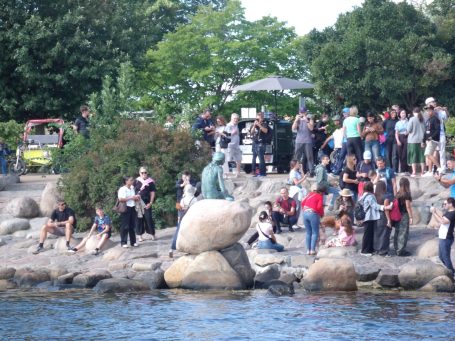
You'll have no doubt have heard of the little mermaid.
One of Copenhagen's most famous attractions, immortalised in photographs, postcards and pretty much every Copenhagen tourist guide ever produced.
So naturally, we went to see her from the comfort of a boat (I'm so glad, the crowds were a bit silly).
And… well…
She's little.
Really little.
Perched on a rock beside the harbour, the bronze statue is based on Hans Christian Andersen's famous fairy tale and was unveiled in 1913. She's become one of the symbols of Copenhagen and attracts thousands of visitors every year.
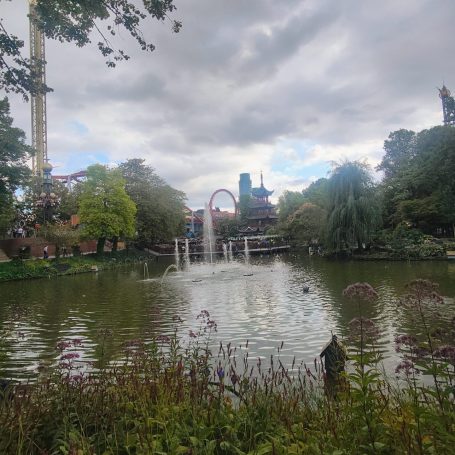
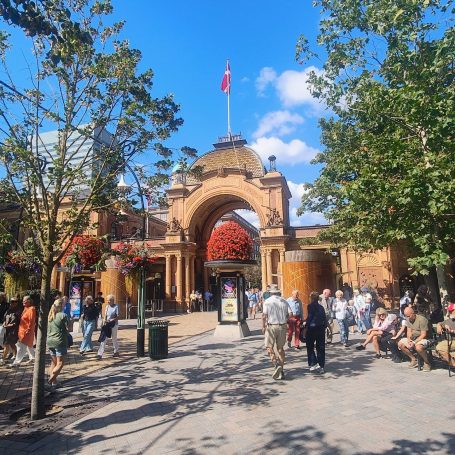
The highlight of the trip; Tivoli Gardens, right in the middle of Copenhagen.
And when I say right in the middle, I mean it. You're wandering around a fairly normal-looking city centre and suddenly there's a huge, beautifully lit amusement park sitting there.
Tivoli first opened way back in 1843, making it one of the world's oldest amusement parks. It's also said to have been an inspiration for Walt Disney when he was developing Disneyland — and you can see why.
It's not your typical modern theme park where the main objective appears to be finding the biggest roller coaster possible and spending half your day queuing for it.
Tivoli is much more about the atmosphere.
There are gardens, fountains, restaurants, old-fashioned fairground rides, live entertainment and an enormous amount of attention to detail. When the lights come on in the evening, it becomes particularly impressive.
Of course, there are still plenty of rides if that's your thing. There's everything from gentle family attractions to some seriously fast and terrifying-looking roller coasters.